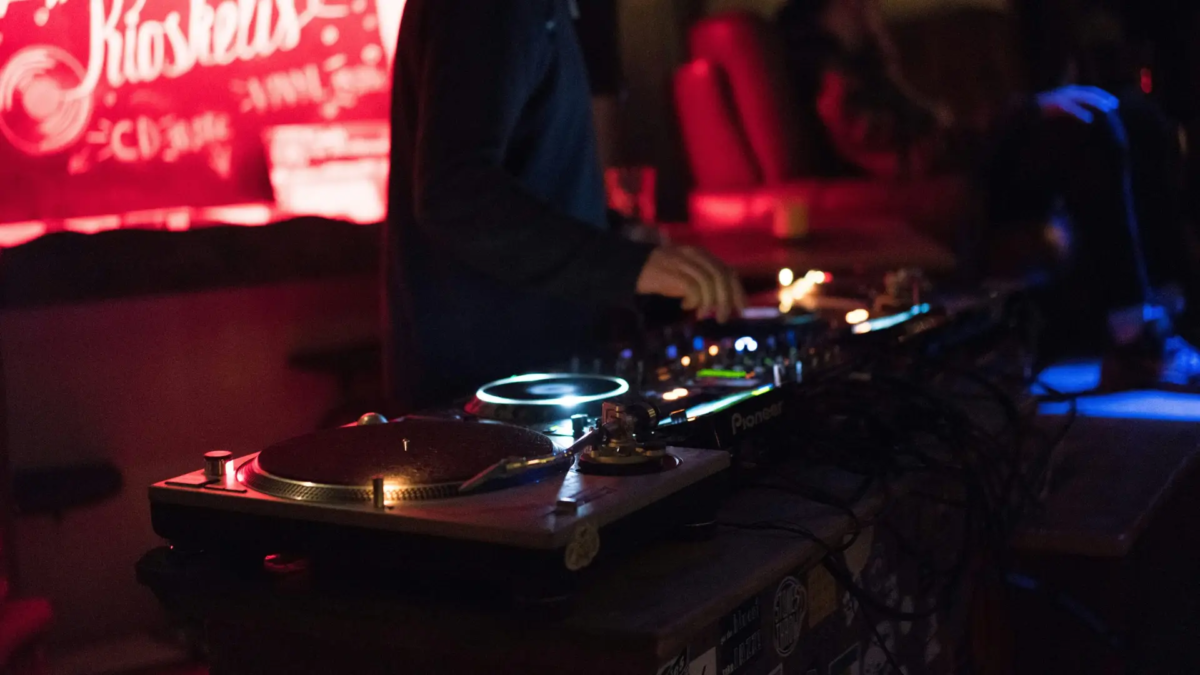
How to Start DJing: An Old and new school dj console in one.

How to Start DJing Today: 30 Years of Real Experience and Honest Advice

How to Start DJing

30 Years of Real Experience and Honest Advice

For over three decades, I’ve been part of the DJ world. I’ve watched it shift, transform, and reinvent itself countless times. If you’re wondering how to start DJing, especially in today’s fast-paced scene, I hope this article brings you something worthwhile. No hype, no gimmicks. These are just honest thoughts from someone who’s been behind the decks long enough to know a few things… and still learning.

Back Then, It Was All About the Hunt

When I first stepped into this world in the early ’90s, DJing wasn’t a trend. It was a calling. It started with records. Crate digging. Spending hours in stores hunting for that rare groove no one else had. Some records came with plain white labels, blank without artist or title, so you had to trust your ears.

That feeling of finding something raw and powerful is what drove me. If you’re wondering how to start DJing, perhaps that same curiosity is already alive within you. Back then, we didn’t have waveforms or sync buttons. It was just two turntables, a mixer, and your ears. You learned from mistakes, and every mix taught you something.

Then Came CDs… and Lighter Bags

When CDJs hit the scene, especially the Pioneer CDJ-100, I must admit: it initially felt strange. Suddenly, I wasn’t hauling around four heavy bags of vinyl anymore. Just a tiny case of CDs and a head full of ideas. It was freeing, but it also came at a cost.

The sound? A bit colder. And while it wasn’t vinyl, Pioneer did something thoughtful in their more advanced and higher-end models released after the CDJ-100. They designed jog wheels that replicated the tactile feel of a record. The grooves and the resistance were little gestures to help people like me transition more naturally. For a while, many setups still had both turntables and CDJs. That mix of old and new allows you to maintain your roots while exploring the future. It was a beautiful time to be a DJ.

So, if you’re beginning today, know that your tools might change. The key is never to lose your ears and your heart for the music.

The Laptop Era Changed Everything

When software like Traktor and Serato arrived, things really changed. Suddenly, you had your whole library in your backpack. The possibilities grew overnight.

At first, I was skeptical. Sync buttons? Wasn’t this cheating? But then I realized it gave me more time to prepare better, play more broadly, and express myself more. And I’ve come to respect that. Look, I learned beatmatching the hard way. I still think everyone should, but I won’t shame someone for using tools that help them stay creative and in control.

So, don’t feel guilty for using digital tools when you’re figuring out how to start DJing today. Just make sure you’re still listening, still selecting with intention, and still respecting the music.

What a DJ Used to Be… and What It Means Now

This is where things get personal. Back in the day, a DJ’s job was to find and play amazing tracks. That’s it. You were the bridge between great music and the people.

Over time, that changed. You weren’t just behind the decks anymore; you were expected to bring a crowd, be a promoter, and have a stylish look.

I’ve never felt entirely comfortable with that shift. I’ve simply never chased fame. I want the music to shine. There’s beauty in letting a track breathe, letting people feel it. The idea that you have to change tracks every 90 seconds or add ten FX layers to hold attention? That’s not DJing to me. That’s pure distraction.

If you’re starting out and feel like the scene’s moving too fast or asking too much, take a breath. Ask yourself: Why do I want to DJ? Your answer will guide your path.

Gear Evolves, But Values Can Stay

Yes, we’ve gone from vinyl to CDs to USBs and laptops. And yes, the tools matter. However, the heart of DJing lies in selection, connection, and flow. That stays the same.

I remember Traktor and Final Scratch, as well as the early controllers. Even now, with modern setups, I still value understanding the track. Learn its structure, how tension and release work, and when a track needs space versus when it needs a surprise.

So, if you want to know how to start DJing meaningfully, keep your ears sharp, your heart open, and your ego in check.

My Own Way of Doing Things

I’m not flashy. I don’t jump around the booth. I try to play great music, connect with the room, and let that be enough.

Yes, I’ve considered wearing a helmet or hiding my face. Not to seem mysterious, but to remind people the DJ isn’t the focus; the music is.

That said, I know personal image has its place. But if you’re new here, please don’t feel you have to become someone else to belong. Your true self is enough. Just invest the time, dig deep, and lead with your passion.

So, how to start DJing, and what Should You Learn First?

Let’s keep this simple. If you’re starting out, focus on:

  • Beatmatching by ear: understand tempo, rhythm, and feel.
  • EQing: blend frequencies without clashing.
  • Phrasing: line up intros, breaks, and drops appropriately.
  • Looping: for creativity and tight transitions.
  • Track selection: trust your instincts, not just charts.
  • Storytelling: build a set that flows, not just bangs.
  • Critical listening: record your mixes, then listen back.
  • Respect: for the music, the artists, and the space in which you play.

This list isn’t exhaustive. But it’s a start. You’ll grow your own style as you practice.

Find Your Place

Some DJs love the spotlight. Some love the shadows. I’ve always leaned toward small clubs, where 150 people listening deeply means more to me than 5,000 jumping to drops they’ve heard a thousand times or just staying still because they must record everything with their smartphones and create posts on social media to say: “I am here, so I am important and cool.”

You might prefer something else. And that’s great. Try:

  • Playing online
  • Hosting radio shows
  • Organizing local parties
  • Joining an artist collective
  • Opening for others

Find your community. There’s space for every kind of DJ.

Chasing Likes vs. Chasing Purpose

Today, visibility can feel like everything. But what lasts is connection. I’d rather someone come up to me after a set and say, “That one track changed my night,” than rack up 10K likes.

So, while navigating social media, branding, and promotion, don’t lose your center. Don’t let metrics define your love for music.

If you’re stuck, go listen to music that inspired you years ago. Make a mix just for yourself. Remember that DJing is, first and foremost, about joy.

Final Words, From Me to You

If you’re still reading, thank you. That already says a lot about you.

So, how to start DJing? Here’s my version:

  • Follow your curiosity.
  • Respect the craft.
  • Keep learning.
  • Stay honest.

No matter how old the gear becomes or how many trends come and go, music will always find its way. And so will you.

If this article resonates with you, check out:
Stay Updated!

dlxmedia-hu-ZrtsGzVW2vk-unsplash

Shaping My Voice: Music, Photography, and Videography Team Up

Shaping My Voice

Music, Photography, and Videography Team Up

Creativity has always been about expression, but more than that, it’s about connection. Music, photography, and videography are the primary mediums through which I communicate my emotions, thoughts, and experiences. Each feeds into the other, creating a unique synergy that shapes my artistic voice.

The Soundtrack of Creation: Music as a Foundation

Music has always been at the heart of my creative journey. When I’m behind the decks, I’m not just mixing tracks. I’m weaving a narrative. Every beat, every transition, creates a rhythm that mirrors the emotional highs and lows of life itself. This rhythmic exploration is reflected in my photography and videography as well, where I use movement and composition to capture the same flow of energy and emotion.

Photography: Freezing Moments, Shaping Stories

In photography, I find myself capturing more than just an image. Each shot is an interpretation of the world around me, a pause in time that holds a specific emotion or feeling. Similar to the way I build a DJ set, photography is about choosing the right elements—lighting, composition, subject—each one working together to form a complete story. Like music, the scene I capture must resonate with me first before I can share it with others.

Videography: Bringing Sound and Vision Together

Videography adds another layer to this creative process. While photography captures still moments, videography introduces time and movement into the equation. It’s about combining imagery with sound to tell a complete story. Just like a DJ set, each frame, each sound, is carefully placed to evoke the feeling I experienced when creating it. The interplay between these elements creates an immersive experience, allowing the viewer to feel the emotion in a way that still images or sounds alone cannot.

The Interconnection of Creative Disciplines

What binds music, photography, and videography together is the desire to communicate—to connect. Whether I’m curating a DJ set, capturing a photograph, or shooting a video, each act is a means of expression, a way to share my internal world with others. My experience in one discipline influences the others, allowing me to create more cohesive and meaningful work. They are not separate entities but rather interconnected elements that work in harmony.

I’m continuously shaping my voice as an artist through all of these mediums. I look forward to sharing more of these creative explorations and the stories behind them, using the tools of music, photography, and videography to communicate in the most authentic way possible.

#CreativeJourney #MusicPhotographyVideography #ArtisticExpression #VisualStorytelling #DJingAndPhotography #VideoArt #CreativeFusion #ArtInMotion #PhotographyAndMusic #VideographyInspiration

Curious about my creative process? Explore more in my portfolio, and let’s connect through my art. 🌟🎥📸

Interested in collaborating or learning more? Reach out through my “Creative Projects” page! ✨🤝🎶,

Stay Updated!

Collection of vinyl records covers panoramic background - The Art Of DJing

The Art of DJing

The Art of DJing

A Conversation Between Music and Emotion

For me, DJing is more than just playing tracks. It is an artistic expression, like photography and videography. It is a way to externalize my state of mind, to channel thoughts, emotions, and energy into sound. It is a form of communication, a way to build a connection with those who share my love for music.

DJing is about selection, but it is also about technique. It is about creating a seamless dialogue between songs, blending them smoothly, allowing each track to breathe, and giving it the space it deserves. The beauty of DJing lies in its ability to weave frequencies together, let the music speak for itself, and shape a sonic experience that unfolds naturally.

A DJ set is not just a random selection of songs. It is a journey. Sometimes, I start with a track that has a deep meaning for me, a message I want to convey. From there, I develop the set, following a sonic path that reflects my emotions. And yet, I love to introduce the unexpected, disrupt patterns, and surprise the audience. The final track is never a coincidence. It is always a closing statement, whether it is a farewell, a reflection, or an invitation to think beyond the music.

Of course, DJing is also about reading the room. I always aim to stay true to my artistic vision, but there is an undeniable need to balance that with the energy of the space, the expectations of the crowd, and the venue itself. It is a delicate compromise, a conversation between my idea of a DJ set and the audience’s reaction. Adjustments are inevitable, but the essence of my musical message remains intact.

Ultimately, DJing is about creating an experience that transcends sound. It is about forming an almost intuitive connection with those on the dancefloor. It is about guiding them through a story, making them feel something, and, if only for a moment, sharing a deep, unspoken understanding through music.

🎧 If you enjoy exploring music beyond the mainstream and want to stay updated on my latest DJ sets, insights, and projects, subscribe to my blog! Let’s continue this conversation together.

Stay Updated!

Two vinyl records before a collection of albums, mixing across genres concept.

Why I Love Mixing Across Genres

Why I Love Mixing Across Genres

One of the greatest joys of being a DJ is the freedom to craft a journey, a sonic experience that unfolds over time and invites the audience to explore new musical landscapes. This is where mixing across genres becomes not just a technique but an art form.

I can fully realize this vision when I am given complete control over a venue, especially in more intimate settings with audiences of 150 to 300 people. Unlike large clubs with tighter constraints, these smaller spaces allow me to develop a DJ set over hours, carefully constructing a narrative that evolves organically.

I usually begin with downtempo electronic music, which is melodic yet textured, featuring bleeps and glitches, and is often purely instrumental. This stage is about acclimating the audience, giving their ears and minds time to adjust to the unique soundscape I will be creating for the rest of the night. Slowly and gradually, I increase the tempo, moving into glitch IDM.

From there, I shift into a more prolonged phase of Organic, Melodic, Deep, and Progressive House. These genres provide the perfect balance: engaging enough to get bodies moving yet mellow enough to allow people to enjoy their drinks and conversations. This warm-up is essential, laying the foundation for what is to come.

As the energy in the room builds, I transition to Electro House and then Electro, allowing the BPM to rise steadily. By now, the audience is more involved, and I carefully read the room, gauging when to push forward or pull back. Tech House and higher BPM tracks bring the energy to a peak, but I always leave space to pause, giving people a chance to catch their breath, grab a drink, or recenter themselves. These moments of respite are as crucial as the high-energy tracks; they keep the flow dynamic and ensure the audience can reenter the groove when they are ready.

Toward the end of the night, I shift into Bass House, Breakbeat, and even 140 tracks. The room is alive, and the audience is fully immersed. But my favorite moment of every set is the closing track. I love to end with a song that stands apart from the rest, not just musically, but in its message. Whether it is a heartfelt farewell or a profound concept woven into the lyrics, I want to leave the audience with something meaningful to carry with them as they head home.

Mixing across genres is not just about variety; it is about building an emotional and physical connection with the audience. Each transition is a conversation, each track a stepping stone on a shared journey. For me, there is no greater reward than watching people lose themselves in the music and come away feeling like they have been part of something unique and unforgettable.

Stay Updated!